
Two numbers anchor this guide.
The first thing I tell anyone who emails me from Los Angeles or the Bay Area about UFC betting is that they are not really asking a betting question. They are asking a geography question, a tax question and lately an integrity question — all dressed up as "where can I put twenty quid on Pereira". California is the one US market I have tracked for eight years where the most important number for a fight-night punter is not the moneyline. It is the address on their driving licence.
What makes the California UFC scene unlike anywhere else is the absence of a state-regulated product. The handle Californians push through their phones every fight week mostly flows through offshore books or, in the last eighteen months, prediction-market apps that look like Robinhood and behave like FanDuel. The regulatory landscape did not stand still in 2025 — the AG gutted daily fantasy pick'em, the governor signed a sweepstakes ban, and the Indian Gaming Association went on record about a 2028 referendum window.
MMA wagering versus casual fan engagement. "MMA wagering" means real money placed on the outcome of a sanctioned bout — moneyline, method of victory, totals, props, parlays. It is the activity tracked in $10.3 billion of measured 2024 handle. Casual fan engagement — fantasy leaderboards, free-to-play pick'em, watch-party brackets — is something else, and conflating the two is how Californians end up surprised at what they have signed up for.
Two numbers anchor this guide. An estimated 1.2 million Californians meet the clinical bar for problem or pathological gambling. Total MMA handle hit $10.3 billion in 2024 with a 17 percent jump, and Californians punch well above their population share. The state has zero licensed online sportsbooks, zero regulated UFC markets and zero state-run problem-gambling protection that applies to the offshore apps most Californians use. Read this as a map of a market that exists almost entirely in the dark.
What This Guide Actually Covers
- California has no state-regulated UFC betting in 2026 — and probably not before a 2028 referendum, with the 2026 window now considered a long shot.
- AB 831 closed the sweepstakes-casino loophole on January 1, 2026, with misdemeanour penalties of $1,000-$25,000 and up to a year of jail for operators.
- MMA betting handle hit $10.3 billion in 2024 — a 17 percent jump — with Californians driving a meaningful slice through offshore books and prediction markets.
- The Isaac Dulgarian fight on November 1, 2025 is the integrity pivot of the year: line moved -250 to -130, Caesars and DraftKings voided action, FBI opened an inquiry.
The California Fight-Money Map at a Glance
A reader in Manchester emailed me last month asking why the California market matters for someone in the UK. The honest answer: California is the canary. Whatever happens to UFC betting in the world's fifth-largest economy by GDP, with 40 million people and 109 federally recognised tribes, sets the tone for every other unregulated market — and tells you where the offshore operators you might already use will point their growth budget next.
$12.1 billion
Sacramento-region tribal-casino GGR in fiscal 2024 — more than a quarter of all US tribal gaming revenue.
109 / 66
Federally recognised tribes in California; sixty-three own a combined sixty-six casinos. The political bloc no UFC-betting bill clears without.
~1.2 million
Californians who meet the clinical bar for problem or pathological gambling — about 3.7 percent of adults who have gambled.
~17 percent
Share of California voters who backed Proposition 27, the 2022 measure that would have legalised online sports betting.
Taken together, these four numbers tell you California's betting economy is enormous, dominated by land-based tribal operators and politically allergic to non-tribal online product. The $12.1 billion tribal GGR figure is why DraftKings could not buy its way in with $400 million of ad spend in 2022, and why Kalshi can sit inside the state today running prediction markets that look an awful lot like a sportsbook. The tribes own the gaming agenda. The state attorney general is currently the only meaningful enforcement actor against non-tribal product, and the addressable problem-gambling population is roughly the size of San Diego. Anything you read in the rest of this guide should be calibrated against those facts — they explain why the legal text matters more than operator marketing, and why the integrity story has more leverage than usual when the regulated channel is missing.
From the map of money, on to the map of law.
Prop Scanner
What the Law Actually Says in 2026
UFC betting in California is not state-licensed in any form as of May 2026. No sportsbook, prediction market or DFS pick'em operator currently holds a California licence to take action on UFC fights. Legal exposure is on the operator side first and the bettor side second, but neither risk is zero.
I once spent a long afternoon arguing with a Sacramento lawyer who insisted ordinary Californians never get prosecuted for placing offshore bets. He was technically right and practically dangerous. Right, because the published cases over the last decade pursue books and payment processors, not punters. Dangerous, because that observation is the start of the legal picture, not the end.
The statutory foundation is Penal Code §337a, the old anti-bookmaking provision California has used for nearly a century. It treats wagering on the outcome of a contest as a misdemeanour for the person who "engages in" or "promotes" it. Courts have read "engages in" narrowly for recreational bettors and aggressively for anyone who handles other people's money. The other foundation is the tribal-state compact framework — the constitutional carve-out giving recognised tribes exclusivity over Class III gaming on Indian land, which is why a non-tribal commercial sportsbook cannot simply pick up a state licence the way it could in New Jersey.
On top of those foundations, 2025 stacked two new layers that matter directly to UFC bettors. First, the Bonta DFS opinion. On July 3, 2025, AG Rob Bonta issued Opinion No. 23-1001, concluding that both pick'em and draft-style daily fantasy contests are illegal sports wagering under §337a. Bonta's words: "It is a violation of law, as outlined in our official opinion, to provide a platform in the state of California for California consumers for daily fantasy sports. The next step is our enforcement." The opinion is sharper: "We conclude that participants in both pick'em and draft-style daily fantasy sports games are betting on sporting contests in violation of section 337a." That sentence is what made leading pick'em operators redraw their California offerings.
AB 831 in plain English. Governor Gavin Newsom signed the sweepstakes-casino ban on October 11, 2025; it took effect January 1, 2026. It defines "online sweepstakes gaming" broadly enough to capture any product that uses a dual-currency system to simulate casino, lottery or sports-wagering play for cash-equivalent prizes. Violations are misdemeanours carrying fines of $1,000 to $25,000 per offence and up to one year in jail. The bill does not criminalise the player. It criminalises operating, promoting and supplying such platforms inside California.
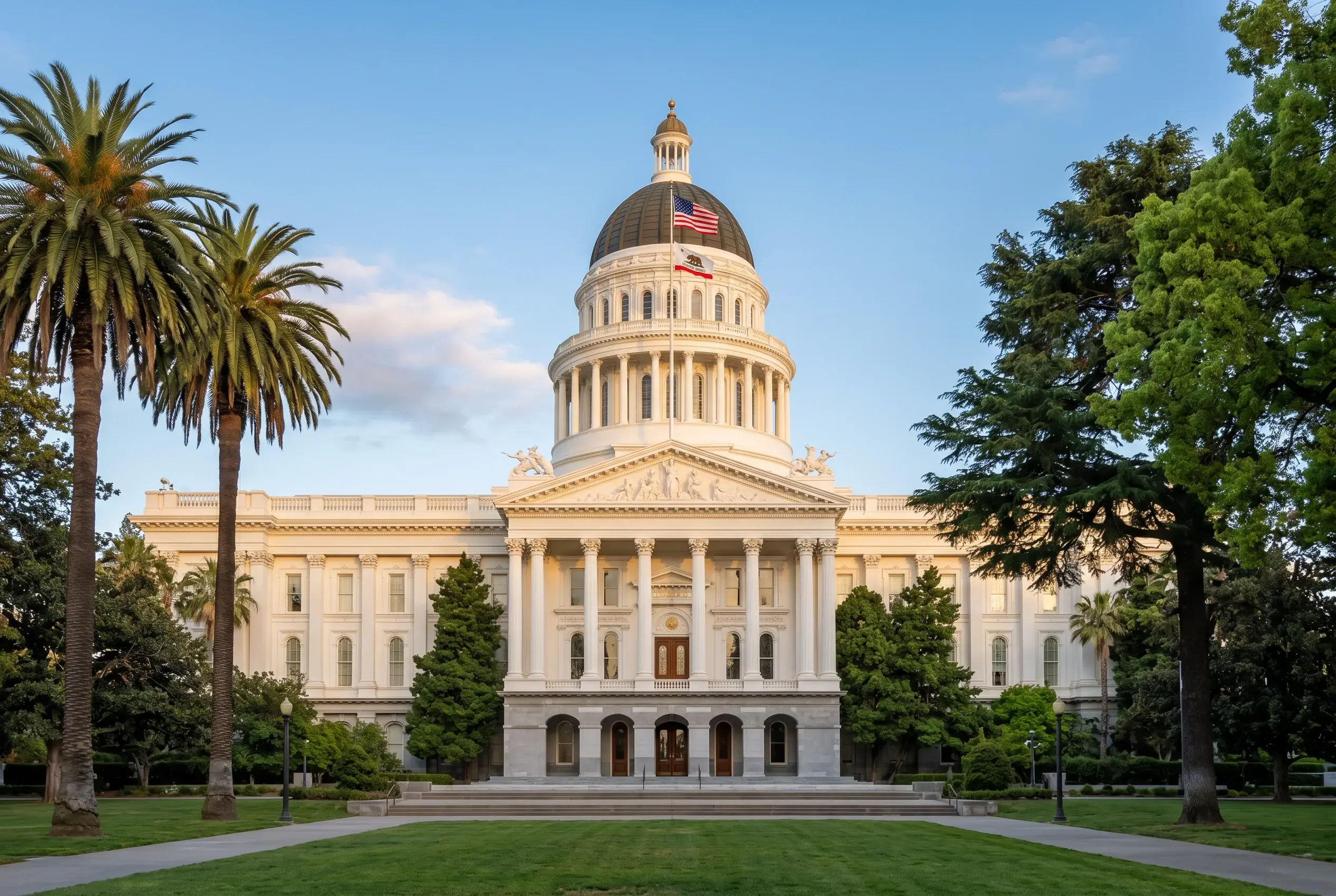
The third layer is enforcement posture. Bonta's office has shown it will write opinions, push cease-and-desist letters and publicly name offending products. It has not shown any appetite for knocking on the door of a Sherman Oaks accountant who lost $300 on a Pereira fight. Realistic exposure for a typical California resident betting offshore in 2026 is close to zero on the criminal side and meaningful on the civil side — primarily tax reporting and the loss of consumer-protection recourse. Full anatomy in our piece on California sports betting law and what the Penal Code, AB 831 and the Bonta DFS opinion mean for UFC bettors.
The Four Channels Californians Actually Use
"So where do people actually bet?" — that is the question I get on every podcast. There is no one-word answer. There are four channels, each with its own legal posture, payout reliability and integrity profile. I will walk through them in order of how much California fight-night money flows through each.

| Channel | Legal posture in CA 2026 | Payout reliability | Consumer recourse if dispute |
|---|---|---|---|
| Offshore sportsbooks | Operating to CA residents is illegal under §337a; bettor rarely prosecuted | Operator-dependent; no state backstop | None — purely the operator's own dispute desk |
| Prediction markets | CFTC-regulated as event contracts; AG is challenging classification | High on cleared contracts; venue exposure remains | CFTC complaint route; no state-level recourse |
| DFS pick'em apps | Held to be illegal sports wagering under AG Opinion 23-1001 | Mid — many operators voluntarily exited or restructured | None state-level after July 2025 |
| Tribal casino retail | Legal on tribal land for compacted games; no sports betting under any current compact | High for permitted products | Tribal gaming commission; no UFC betting available |
The offshore channel is the heavyweight. Total nationwide illegal-market handle is now estimated at $673.6 billion annually by the American Gaming Association — a figure that includes everything from local back-room books to crypto-funded offshore deposits — and California's share is large enough that AGA modelling suggests the state alone loses around $800 million in foregone tax revenue every year. UFC is overrepresented offshore because offshore books have always been more flexible about combat-sports action than licensed US books are about lines on smaller cards.
Offshore sportsbooks. The traditional path. Account funded by card, crypto or wire; UFC menu deeper than any US-licensed product; payouts run through the operator's own treasury. Risk concentration sits in the book's solvency and the bettor's tax exposure on any winning year.
Prediction markets. Kalshi and Polymarket sell binary event contracts that mirror moneylines and method-of-victory bets without calling themselves sportsbooks. They cleared CFTC review for sports contracts in 2025. AGA's Bill Miller called the model "sports betting under a different name" and the California AG signalled enforcement interest in late 2025.
DFS pick'em apps. Entries on UFC fights — over-under strikes landed, takedowns, fight-goes-distance — used to fill the licensed-product gap. After Bonta Opinion 23-1001 in July 2025, most operators restructured to peer-to-peer formats or paused California UFC contests.
Sweepstakes social books. Dual-currency products that offered "sweep-coin" UFC contests through 2025. AB 831 closed this lane on January 1, 2026. Operators who continue from California face $1,000-$25,000 misdemeanour exposure. The lane is effectively dead.
One data point shows how loud the prediction-market lane has become. In 2025 Kalshi became the third-largest digital advertiser in US sports betting by ad impressions — 5.2 billion, ahead of FanDuel's 2.9 billion. A federally registered exchange now outspends a regulated sportsbook on ads served to Californians. The FBI Crime and Corruption in Sport and Gaming Program weighed in from the other direction, warning in its January 2026 Cyber Alert that bettors using illegal offshore sites "risk funding organised crime and become vulnerable to violence, extortion and fraud."
The Numbers Behind the Octagon Economy
Here is an industry-insider fact most fight fans never hear: UFC fighters take home roughly 16 to 20 percent of the promotion's revenue, while NBA, NFL and NHL athletes receive close to 50 percent under their collective bargaining agreements. That asymmetry has nothing to do with betting on the surface — but it shapes everything about the betting market, because it explains why fighters are economically more vulnerable to integrity threats than any other major-league athlete in the United States. Hold it in your head as the structural backdrop to every number below.
$10.3 billion
Measured MMA betting handle in 2024 (+17 percent year on year).
$3.2 billion → $6 billion
Global MMA-and-boxing betting market in 2024, projected to clear $6 billion by 2033.
>18 percent CAGR
UFC's gross gaming revenue growth rate over the last five years.
$1.502 billion
UFC's full-year 2025 revenue, on a 57 percent EBITDA margin.
The $10.3 billion handle figure sits at the intersection of three trends. First, US legal sports betting overall is enormous — regulated books processed $166.94 billion in 2025 handle with revenue of $16.96 billion, up nearly 23 percent on the prior year. MMA is a small slice but the fastest-growing one, and that growth rate is what gives the wider sportsbook industry confidence to keep adding UFC props quarter on quarter. Second, UFC's underlying business is compounding at over 18 percent a year on GGR contribution, faster than every major sport. Third, the global combat-sports betting market nearly doubles between now and 2033 on most credible projections.
Add a fight night like UFC 300, which sold 1.2 million pay-per-views in April 2024 — the promotion's biggest non-McGregor card ever — and you can sketch the picture: every major UFC pay-per-view now pushes a nine-figure handle through some combination of licensed books, offshore books and prediction markets. A reasonable upper-bound estimate for a top-five 2026 card is around $100-$150 million in measured handle and an unknown but probably larger unmeasured pool offshore. UFC's 700 million global fans and roughly 90 million US fans provide the demand engine. The asymmetry between fighter pay and revenue provides the supply-side stress that gives the integrity story its teeth, and the offshore lane its disproportionate share of MMA action relative to every other major US sport.
That asymmetry is where the integrity story starts. First, the betting product itself.
Reading a UFC Card Without Drowning in Markets
The first UFC bet I ever placed, back in 2017 on a card I have since erased from memory, was a five-leg parlay including the same fighter's moneyline and a method-of-victory prop on the same fighter. That is a sucker bet by construction — the legs were correlated, the book knew it, the price reflected it. The most common mistake I see from California readers is not lack of bankroll discipline but lack of understanding of how the basic markets fit together. So here, briefly, is the menu.
Moneyline. The simplest bet — pick which fighter wins. American-format odds with a plus or minus sign, the minus side being the favourite. The line moves before the bell as money flows in.
Method of victory. Pick how the fight ends — KO/TKO, submission, decision. Wider odds than the moneyline because the outcome space is more specific.
Total rounds. Over or under a set round total, often 1.5 or 2.5. The market reads stylistic match-up signals — wrestlers slow fights, strikers shorten them.
Prop bets. Strikes landed totals, takedown counts, fight-goes-the-distance, performance-of-the-night odds. The fastest-growing UFC market segment and the messiest to read.
Parlays. Multiple bets combined into a single ticket; payouts multiply but so does variance. Books love parlays because their long-run hold is higher than on flat bets.
Moneyline — the straight win-or-lose price on a fighter, quoted in American odds. A "-160" favourite needs a $160 stake to win $100; a "+135" underdog returns $135 on a $100 stake.
Method of victory — a market on how the bout ends rather than who wins. KO/TKO, submission and decision are the three primary buckets.
Prop bet — any market on a specific in-fight event rather than the final result. Strikes landed, takedowns, knockdowns, fight-goes-the-distance, performance bonuses.
Worked example. Suppose Gaethje opens at +135 and Fiziev at -160 on a hypothetical main-card lightweight bout. A $100 moneyline ticket on Gaethje pays $235 total if he wins. A $100 ticket on Fiziev requires you to risk $160 to win $100, returning $260 total. The implied probabilities are roughly 42.6 percent (Gaethje) and 61.5 percent (Fiziev), summing to over 100 — that gap is the book's vig.
If the same fight were priced by a prediction market, the contracts might trade at $0.43 (Gaethje YES) and $0.61 (Fiziev YES) — the same information stripped of the operator's overround.
Two practical notes. First, never compare prices across only one book on fight night — for a UFC main event you can routinely find a five-cent gap on the same moneyline if you shop. Second, treat method-of-victory and round totals as the place where most edge lives, because casual money pushes the moneyline far more efficiently than the props. For the round-by-round mechanics, the math behind parlay payouts and how line movement actually telegraphs sharp money, read the dedicated breakdown in UFC bet types explained — reading moneylines, method of victory and round totals without the marketing spin.
What "Offshore" Really Means When the Police Knock
A reader in Long Beach sent me a screenshot last December of an offshore book refusing a $4,200 UFC parlay win, citing a "deposit-method mismatch verification". He had used the same crypto wallet for both ends. The book paid after two weeks of pressure. That is the offshore reality in one anecdote: legal exposure is small, payout reliability is operator-dependent, consumer recourse is zero.
FBI risk warning. The FBI's Crime and Corruption in Sport and Gaming Program issued a Cyber Alert in January 2026 stating bluntly: "Bettors risk funding organised crime and become vulnerable to violence, extortion and fraud." The agency named offshore sportsbooks as being linked, in some cases, to human trafficking, drugs and weapons trafficking. That is a US federal law-enforcement assessment, not advocacy from the regulated industry.
What "offshore" actually means. An offshore sportsbook is a betting platform licensed outside the United States — most commonly in Curaçao, Costa Rica, Panama or Antigua — that accepts US-based customers despite no US licensing. The book is legal where it is based. It is not legal to operate inside California. Major US-licensed sportsbooks like DraftKings and FanDuel are emphatically not offshore. They are simply not available in California because the state has not licensed them.
The economics are dictated by one number: the AGA estimate that Americans push roughly $673.6 billion through illegal and unregulated betting channels each year. That figure includes far more than UFC, but the proportional MMA share offshore is higher than for NFL — partly because offshore books have always been first to post lines on smaller UFC cards, and partly because regulated US books historically capped MMA exposure tighter than basketball or football. The AGA's Bill Miller has been hammering one line for two years: "Sports betting needs to be regulated by states and tribes. That is how consumers are protected and communities benefit." Whatever you think of his employer's commercial interest, the consumer-protection point survives on its own.
Do
- Understand you have no state-level recourse if a withdrawal stalls — pick a book with a multi-year track record.
- Treat any offshore deposit as money you have accepted you could lose.
- Keep complete records of deposits, withdrawals and bet history for US tax reporting.
- Use the same deposit method for withdrawals where possible — most payout friction comes from mismatched rails.
- Read the operator's full terms before depositing — particularly bonus rollover, max-payout caps and "irregular betting patterns" clauses.
Don't
- Wire money to an unverified destination — once it leaves your bank, recovery is essentially impossible.
- Dismiss the FBI guidance about organised crime exposure — the agency named the risk in writing in January 2026.
- Carry an offshore balance larger than you would lose comfortably if the book vanished tomorrow.
- Believe any operator who claims their California operations are "licensed" — no offshore book holds one in 2026.
- Skip the tax filing on offshore winnings — penalties on undeclared gambling income are punitive.
The offshore channel is not monolithic. There is a meaningful gap in operator quality between brands that have paid every UFC parlay for fifteen years and newer venues that came in with crypto-first deposit funnels. The reputational signal lags reality by months — by the time community chatter turns negative, withdrawal queues are already three weeks long. For a deeper map including solvency signals, crypto deposit mechanics, geo-tracking detection and what to do if a payout stalls, read our breakdown at offshore sportsbooks for California MMA bettors — what you accept when you click "deposit".
Prediction Markets, Pick'em Apps and the Grey Zone
Consider how absurd this sentence would have sounded in 2022: "A federally regulated financial exchange now spends more on US digital advertising for sports betting than FanDuel does." It would have read like satire. It is the actual 2025 data — Kalshi posted 5.2 billion digital ad impressions versus FanDuel's 2.9 billion, vaulting into third place among US sports-betting advertisers despite holding no state sportsbook licence anywhere. The product is sports betting in everything but legal classification, and California is one of its most important growth markets because the state has no licensed alternative.
The AG opinion that changed DFS. California AG Rob Bonta's Opinion No. 23-1001, issued July 3, 2025, held that both pick'em and draft-style daily fantasy contests are illegal sports wagering. It triggered a coordinated industry response in late 2025.
Prediction markets and DFS pick'em ended up in the same conversation because they answer the same vacuum question: "How do you sell sports-outcome products in a state without a sportsbook licence?" DFS apps answered with skill-game framing. Prediction markets answered with financial-instrument framing. Both ran up against the same regulatory immune response in 2025.
| Feature | Prediction market | DFS pick'em | Licensed sportsbook |
|---|---|---|---|
| Federal-level oversight | CFTC as event-contract exchange | None federal | Federal AML; state-licensed |
| California legal status 2026 | Operates; AG enforcement signalled | Held illegal by AG Opinion 23-1001 | Not available — no state licence path |
| Revenue model | Trading fee per contract | Entry-fee rake | Vig built into odds |
| Consumer recourse | CFTC complaint channel | None state-level after July 2025 | State gaming regulator |
| UFC product depth | Limited; main-event moneyline equivalents | Wide before mid-2025; thin since | Not present in California |
The volume is now genuinely material. Super Bowl LX in February 2026 saw combined trading on Kalshi and Polymarket cross $1.6 billion in event-contract volume. By the AGA's tracking, prediction-market contracts have cost US states roughly $800 million in foregone sports-betting tax since the start of 2025. Bill Miller, after the NHL announced a Kalshi-Polymarket partnership, said: "These companies operate entirely outside the legal sports-betting frameworks established by state, tribal and federal law." His shorter line: "Calling it a 'contract' or a 'derivative' does not change the nature of the activity. It might sound like finance, but in practice this is sports betting under a different name."
For Californian UFC bettors, the prediction-market route has been the path of least friction through 2025 and into 2026. Contracts work; platforms accept California users; legal exposure for a retail user is currently distributed onto the federal-versus-state classification fight rather than the punter. Whether that holds depends on what Bonta does next and whether the CFTC reasserts pre-emption. The DFS lane is functionally closed for serious California UFC action.
The Dulgarian Fight and the Day Confidence Cracked
I was watching the prelims at home on November 1, 2025 when my phone started lighting up with screenshots of a moneyline. Isaac Dulgarian, a -250 favourite to beat Yadier del Valle on the UFC Vegas 110 card, had collapsed to -130 across the major books in the final ninety minutes before walkout. By the second round del Valle had won by submission. By the next morning Caesars and DraftKings had voided every ticket. Within forty-eight hours the FBI had opened an inquiry.
Dana White: "This is absolute insanity. It does not look good — it definitely does not look good."
IC360, the third-party integrity monitor used by most major US sportsbooks, flagged the bout as suspicious based on betting-pattern anomalies — large directional money landing late, concentrated on del Valle to win and on a first-round finish. The line started moving the morning of November 1 and accelerated in the four hours before doors opened. Caesars and DraftKings suspended new wagers and refunded all action. FBI involvement was confirmed within days. By the second week of November, UFC veteran Vince Morales told media outlets he had been offered $70,000 to throw a fight, and Vanessa Demopoulos reported similar approaches.
Dana White did not mince words: "If you try and do this — and I have been very loud about this — we will become your worst enemy. We will do everything in our power to make sure you go to jail." UFC's CEO publicly threatening criminal-justice cooperation against any fighter found to have participated in match-fixing is unprecedented in the modern history of the promotion.
UFC's integrity record before Dulgarian. The modern UFC has had remarkably few confirmed match-fixing cases relative to its size. Suspicious betting flags have surfaced — most prominently around a Darrick Minner bout in November 2022 that ended in a fighter manager being banned — but nothing on the scale of Dulgarian, which involved coordinated movement across multiple regulated books, public refunds and federal-agency involvement within seventy-two hours.
For a California-based bettor, Dulgarian matters for three reasons that have nothing to do with the obvious "fighter integrity" headline. First, the line movement happened on the same regulated US books Californians cannot legally access — meaning Californians on offshore lines saw less of the live movement and had fewer surveillance signals to react to. Second, the books that voided action and refunded stakes were the regulated ones; offshore books are not required to and many do not. Third, IC360's integrity infrastructure exists primarily because of state-licensed sportsbook contracts. The more California sits outside the regulated regime, the less integrity-monitoring coverage flows into California-facing betting. The full anatomy gets a fuller treatment in our piece on UFC integrity and the betting scandals that reshape the market.
Why the Tribes Are the Real Gatekeepers
Every conversation about why California has not legalised sports betting eventually ends at the same wall: 109 federally recognised tribes, 63 of which own a combined 66 casinos, and a constitutional carve-out giving them exclusivity over Class III gaming on Indian land. That wall is the single most important fact in California gambling politics. Whatever your view of the tribes' political muscle, you cannot build a US-style mobile-sportsbook market in this state without it passing through the tribal coalition first.
What is a tribal-state compact? A tribal-state compact is a negotiated agreement between a federally recognised tribe and the state government that governs which Class III gaming activities the tribe may operate on its reservation lands. In California, every commercial-style table game, slot machine and future sportsbook on tribal land sits under one of these compacts. They are renegotiated periodically and require approval at both state and federal level. No California compact today authorises sports wagering.
The financial backdrop makes the political logic obvious. Tribal casinos nationwide generated $43.9 billion in gross gaming revenue in fiscal 2024 — an industry record and the fourth consecutive year of growth. The Sacramento region alone contributed $12.1 billion of that. Sharon Avery, then acting chairwoman of the National Indian Gaming Commission, framed the picture in July 2025: "This year's GGR reflects not only the resilience of the tribal gaming industry but also the dedication of tribal leadership to preserving and growing this important economic engine for their communities." A coalition with that scale of assets under management is not going to let an outside commercial operator install a parallel sportsbook layer that cannibalises retail floor traffic.
Tribal politics also explains the AG's confidence in moving against DFS pick'em operators in 2025. The California Nations Indian Gaming Association issued an unusually pointed statement after Bonta released Opinion 23-1001: "California has long turned a blind eye to the illegal gaming market — at the direct expense of tribal governments. Untold millions, if not billions of dollars have been illegally wagered over the past decade." Read between those lines and you see the tribal coalition cheering the AG's enforcement posture, because every dollar that does not flow through DFS or sweepstakes is a dollar that may eventually flow through a tribal product when a future compact permits it.
The tribes hold the gate. The question of when the gate opens is the next one.
The Path to a Legal California Market
The realistic timeline as of May 2026. A statewide sports-betting referendum in 2026 is now widely considered a long shot. Indian Gaming Association leadership has publicly named 2028 as the more probable window for a tribally backed ballot measure. Independent polling supports the demand side: an August 2025 survey found 60 percent of California voters open to legal sports betting.
"When will California legalise?" is the question I get more than any other, usually phrased with more impatience than the politics deserves. The honest answer is that three things need to align: a deal with the tribes on commercial structure, a financial coalition willing to fund a campaign north of $200 million (Prop 27 burned through $400 million in 2022 and lost badly), and a Penal Code amendment route. None is in motion for the November 2026 ballot.
The 2022 cycle is instructive. Propositions 26 and 27 both went to voters and both lost. Prop 27 in particular collapsed — only around 17 percent of California voters supported it, the worst result for any major commercial-gaming initiative in modern US history. That defeat made clear any path forward runs through, not against, the tribal coalition. Demand has since recovered — 60 percent openness today versus 17 percent voting yes in 2022 — but structural barriers have not.
What the Indian Gaming Association has said. Victor Rocha, who chairs the IGA conference, has consistently positioned 2028 as the more credible window. The reasoning is procedural: a 2028 measure can be drafted, funded and qualified at a pace that lets the tribal coalition negotiate commercial terms it can defend internally. Pushing for 2026 forces compromises the coalition has already rejected.
If a 2028 measure passes — and I would put the probability materially better than even given the polling trajectory — it will almost certainly not replicate the New Jersey model. The likely structure is a tribal-led regulatory framework where commercial operators run under tribal licences with revenue-share economics that favour the coalition. UFC betting would land as a default product on day one. The path from a 2028 passing vote to live mobile UFC moneylines accepting California IP addresses would take twelve to eighteen months. Realistic earliest live date: late 2029.
Staying in Control When the State Will Not Catch You
There is a particular cruelty in the California gambling landscape. Of the four channels Californians actually use, three — offshore, prediction markets and the remnants of DFS — have no state-level responsible-gambling infrastructure attached. The fourth, tribal retail, has the strongest infrastructure in the state and does not currently offer UFC betting. The Californian who needs the most help is the Californian for whom no help has been built.

The scale is not hypothetical. About 83 percent of California adults over 21 have gambled at some point, and roughly 3.7 percent — approximately 1.2 million people — meet the clinical threshold for problem or pathological gambling. CalPG has fielded 335,666 helpline calls since 2009. The average debt carried by a Californian who reaches the helpline is over $40,000. Nationally, problem-gambling social costs run around $7 billion a year.
CalPG helpline. The California Council on Problem Gambling operates a free, confidential 24-hour helpline in English, Spanish and most major Asian-Pacific languages. Voice, text and chat options are available. Reaching out does not require any disclosure to a casino, sportsbook or government agency.
Before placing a UFC bet from California
- Have I set a card-week budget I can afford to lose entirely without affecting rent, food or any committed payment?
- Have I checked that I am over 21 and that my deposit method is on an account I solely control?
- Have I separated this bankroll from savings, emergency funds and any account my partner or family depends on?
- Have I set a loss limit for this card and decided in advance what I do when I hit it?
- Have I logged every previous deposit and withdrawal for the calendar year, in case I need to file gambling income on my US tax return?
- Do I know which helpline I would call if my gambling started to feel automatic rather than chosen?
- Am I about to place a bet because I think I have an edge, or because I want to feel something during the prelims?
Robert Jacobson, who runs CalPG, framed his approach in a January 2026 Gaming America interview: "The most important thing is the wellbeing of the caller. We always put that above data collection. We never want a caller to feel uncomfortable or hang up for the sake of a statistic." The contrast with the offshore lane could not be sharper. An offshore operator's customer-retention team is not optimising for caller wellbeing.
The structural problem, bluntly: in a state with a regulated sportsbook market, a problem gambler can self-exclude from every licensed book in one action through a state registry. In California, that registry does not exist for sports betting. Self-exclusion from tribal casinos is possible but does not bind any offshore book or prediction market. A Californian who needs to step away has to do the work themselves, account by account, often using payment-method blocks and gambling-blocker software. The fuller toolkit sits in our resource on responsible gambling foundations for California UFC bettors.
The Golden State's Long Affair With the Cage
Picture the modern UFC without any fighter who came out of California. No Nate or Nick Diaz. No Cain Velasquez. No Urijah Faber. No Chuck Liddell, no Dominick Cruz, no Henry Cejudo. The promotion does not survive its 2000s rebuild without that California pipeline. The state's UFC betting market is not just a regulatory anomaly — it is built on one of the densest concentrations of fight-sport heritage on the planet.
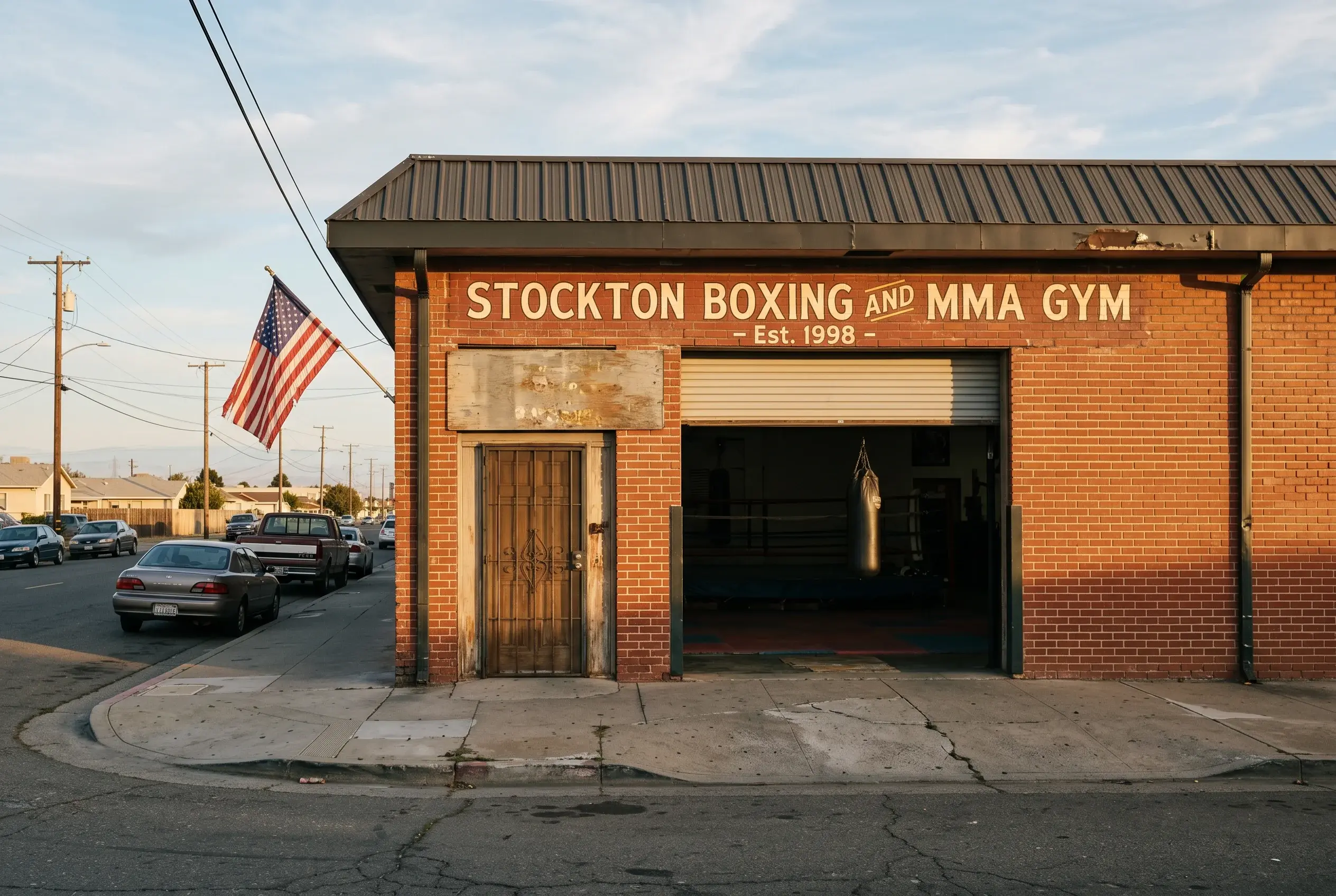
The cards that anchored it. UFC 229 in October 2018, headlined by Khabib versus McGregor, drew its loudest pocket of crowd noise during Nate Diaz's prelim co-main — the Stockton wave of fans had travelled in numbers no other prelim has matched. Cain Velasquez's title runs out of AKA in San Jose drew the largest Spanish-language UFC viewership ever recorded in the Bay Area. Urijah Faber's Team Alpha Male turned Sacramento into a feeder system that produced four UFC champions by 2018.
The Diaz brothers — Stockton. Nick was Strikeforce welterweight champion and a UFC headliner across two eras. Nate has carried PPV main-events against McGregor and Masvidal. The 209 area code is shorthand in MMA for a particular kind of in-cage attitude.
Cain Velasquez — San Jose. Two-time UFC heavyweight champion and the first Mexican-American to hold a UFC title. His fights brought UFC into Spanish-language broadcast deals.
Urijah Faber — Sacramento. Founder of Team Alpha Male, WEC champion, Hall of Fame inductee. His gym produced T. J. Dillashaw, Joseph Benavidez, Chad Mendes and Cody Garbrandt.
Chuck Liddell — San Luis Obispo. The Iceman. Former UFC light-heavyweight champion and the most-watched fighter of the pre-Reebok era. Liddell-Couture and Liddell-Ortiz are still anchor points for UFC's mainstream breakthrough.
UFC's global audience of 700 million disproportionately concentrates in California for the four lineages above. Bay Area, Sacramento Valley, Central Coast and the 209 are where fight-card viewership outperforms population share, and where offshore and prediction-market handle indexes highest. The story of California UFC betting in 2026 is the story of what happens when a state with that much fight-sport identity is also the one US market with no legal way to back its fighters with money.
Questions Readers Keep Asking
The same seven questions land in my inbox every week.
Is it legal to bet on UFC fights from California in 2026?
There is no state-licensed UFC betting product in California. Operating an unlicensed sportsbook for Californian residents is illegal under Penal Code §337a and the AB 831 sweepstakes ban. Enforcement targets operators and payment rails far more than retail bettors, and no Californian has been criminally prosecuted for placing an offshore UFC bet in modern enforcement history. But "rarely prosecuted" is not "legal" — winnings remain reportable for US tax purposes.
Can I use DraftKings or FanDuel for UFC betting in California?
No. None of the major US-licensed sportsbooks operates a sports-wagering product available to California residents. They block California IP addresses because the state has not licensed mobile sports betting. Their daily-fantasy products were also affected by AG Bonta's Opinion No. 23-1001 in July 2025.
Can a California resident face personal legal consequences for placing an offshore UFC bet?
Practical exposure is low but not zero. §337a treats unlawful wagering as a misdemeanour, but the AG's programme consistently targets operators, not retail bettors. No published case in the last decade has criminally prosecuted a California resident for a typical offshore sportsbook bet. Realistic exposures are federal tax exposure on unreported winnings, civil-recovery risk if a financial institution flags transactions, and zero consumer recourse if the book refuses to pay out.
Are UFC winnings from offshore books taxable in the US?
Yes. The IRS treats gambling winnings as ordinary income regardless of where the wager was placed. A California resident with offshore UFC winnings must report them on the federal return and, if winnings cross state thresholds, on the California return. Offshore books do not issue W-2G forms — the reporting burden falls entirely on the bettor.
When could California legalise UFC and sports betting?
A 2026 referendum is now widely considered a long shot. Indian Gaming Association leadership has publicly identified 2028 as the more likely window. An August 2025 survey found 60 percent of California voters open to legal sports betting, but structural barriers around tribal exclusivity have not shifted. Realistic earliest live date, assuming a 2028 measure passes: late 2029.
Where can a California resident self-exclude from gambling?
The California Council on Problem Gambling operates a free 24-hour helpline in multiple languages. Self-exclusion from tribal casinos runs through individual property programmes and the statewide list maintained by the California Gambling Control Commission. Neither binds offshore sportsbooks or prediction markets. For those, the practical route is payment-method blocks, gambling-blocker software, and direct account-closure requests.
What changed for sweepstakes UFC betting after January 2026?
AB 831 made operating, promoting or supplying an online sweepstakes-gaming product in California a misdemeanour carrying fines of $1,000 to $25,000 per offence and up to one year in jail. It captures any dual-currency product that simulated casino, lottery or sports-wagering play for cash-equivalent prizes — exactly how social-book UFC contests had been structured through 2025. Sweepstakes-style UFC contests are now functionally absent from the California market.
What to Watch Through 2026 and Into 2028
Two things will tell you in the next eighteen months whether the California UFC betting market is heading somewhere new or just churning in place. The first is what Rob Bonta's office does next on prediction markets. If the AG escalates from rhetorical pressure to a formal enforcement action against Kalshi-style event contracts, the entire prediction-market lane could narrow sharply. If he holds off, the lane keeps growing and becomes the dominant fight-money channel by default. The second is what the tribal coalition decides about 2028 — whether it lands on a commercial-friendly compact framework or pushes a tribal-only retail model.
Watch three signals through 2026: the next IC360-flagged UFC bout and how the FBI handles the aftermath; the first formal AG enforcement action against a prediction market; and the draft language of any tribal compact amendment that mentions sports wagering.
The Dulgarian fight told us where the integrity stress lives. The August 2025 polling told us where the demand lives. AB 831 told us where the legislature is willing to draw a line. The next chapter of California UFC betting will be written between those three coordinates — probably faster than the policy debate has moved up to now.