

Why a sponsorship line tells you more than a revenue chart
The first thing I do when a new SponsorUnited number drops is open the broadcast from the previous Saturday and count logos. Not because I care who’s paying — because the sponsors who pay the most also decide what graphics sit on top of the cage walk, the corner stool, the scorecard overlay, and the post-fight chyron. That stack is your presentation layer, and presentation layer is where a bettor’s perceptions get shaped before the first leg kick.
So when UFC’s sponsorship intake hits $314 million in 2025, up $63 million on the prior year, I don’t read that as a revenue story. I read it as a control story. The brands paying that bill are buying the right to be the first thing a viewer associates with a flying knee or a flash KO — and a meaningful share of them are sportsbooks, prediction markets, and DFS operators whose product the same viewer might open between rounds. The economic logic is obvious. The presentation consequences are less obvious, and that’s the thing I want to walk through here. I’m going to use the public numbers, not gossip, and try to keep the analysis aligned with what a Californian viewer actually sees on a Saturday night — because what you see in San Diego is not exactly what someone sees in New Jersey, and the gap is part of the story.
See also: sports betting ad saturation in 2025.
The SponsorUnited numbers behind the headline
I’ll start with the only two figures that matter for the rest of this article. UFC’s full-year revenue for 2025 came in at $1.502 billion with an EBITDA margin of fifty-seven percent, building on $1.4 billion in 2024 and a high-single-digit growth rate year over year. Sponsorship within that mix reached $314 million in 2025, up twenty-five percent on the previous year — a jump of roughly sixty-three million dollars in absolute terms. Hold those two numbers next to each other and the picture is clean: sponsorship is now slightly above one-fifth of the whole revenue base, growing faster than the overall business.
That mix shift is the part I find genuinely useful. A sponsorship line growing three times faster than total revenue is not a side bucket; it’s a strategic priority. When something becomes a strategic priority for an organisation with TKO Group’s discipline around margin, the inevitable next move is to lean into the sponsor categories that pay the highest per-impression rate. Sportsbook and gaming logos sit at or near the top of that table in every major US sports league for which we have public data — and UFC is no exception in the categories its sponsorship deck pitches to advertisers.
What I do not see in the public number is a clean split between gaming and non-gaming partners. SponsorUnited’s headline is the aggregate. The category breakdown for UFC is opaque, and any specific dollar figure I’d attribute to sportsbook deals would be guesswork. That opacity is itself relevant, because it means the public observer — bettor, journalist, analyst — has to triangulate from broadcast inventory rather than from a clean disclosure.
How sportsbook deals fit into a UFC sponsorship deck
A sportsbook sponsorship in this league isn’t a single contract. It’s a stack of inventory line items, and once you’ve seen a few of them you can guess at the structure from the broadcast. The official sports betting partner sits at the top — the slot that lets a single sportsbook brand its logo onto the Octagon canvas, the corner stool ads, the in-arena LED rings, and the pre-fight studio set design. That’s a category-exclusive deal in North America for most of its components, and category exclusivity is what makes it expensive.
Under that tier you get supporting inventory. Pre-fight show segment sponsorship. Round-clock overlay branding. Post-event interview backdrop. International edition partners for non-US broadcasts, where the official US partner has no exclusivity. Betting odds graphics packages — the little card that flashes between rounds with the implied probabilities. And then there’s the digital layer: paid placements on UFC’s owned channels, social posts tagged as branded content, and the betting partner section on the official app.
The reason this matters for bettors is the same reason it matters for the sportsbook accountants buying the inventory. A logo on the canvas is awareness. A betting-odds overlay during a broadcast is a soft-call to a specific market. The second one converts better, which is why it costs more — and which is why UFC has every incentive to expand that overlay footprint as long as US broadcasters and local regulators allow it. The growth in sponsorship revenue is partly a function of how much of that overlay inventory UFC can sell year over year without triggering broadcaster pushback or state-level advertising rules.
The other piece I’d flag is that some of these deals carry data components — official partner status comes with access to UFC’s betting data feeds and the right to integrate certain real-time stats into the partner’s own product. That data layer rarely surfaces in the consumer-facing broadcast, but it’s a meaningful part of what the headline dollar figure represents.
What the on-broadcast betting integration actually looks like
If you sat through a numbered UFC card and a Fight Night in the same month in 2025, you saw two different products. The numbered cards lean heavier into the official partner integration — pre-fight odds graphics for every main card bout, between-rounds implied-probability bumpers, and post-decision payout flashes on the methods-of-victory market. The Fight Nights run a lighter version, partly because the inventory commands less of a premium and partly because international rights deals constrain what can be shown to which audience.
The integration mechanics are worth understanding because they affect what reaches a bettor’s eye and what doesn’t. Odds graphics are typically refreshed from a single feed — UFC’s official sportsbook partner supplies the lines that get rendered on the broadcast for North American audiences, even though that partner’s product isn’t legally accessible in roughly a dozen states including California. The lines on screen are not necessarily the lines a Californian viewer could place a bet against. They’re a marketing artefact dressed up as live data, and treating them as the market consensus would be a mistake.
Between-rounds segments are where you see the most aggressive integration. A sponsor-branded segment with a graphic showing how a specific prop has moved during the round, paired with a casual analyst recommendation framed as analysis. This is the inventory category I’d watch most carefully if you’re trying to gauge how betting partners shape narrative. It’s not advertising in the legal sense — broadcast standards typically classify it as editorial content with a sponsorship attribution — but the editorial choices made in those segments line up suspiciously well with the partner’s exposure on any given market.
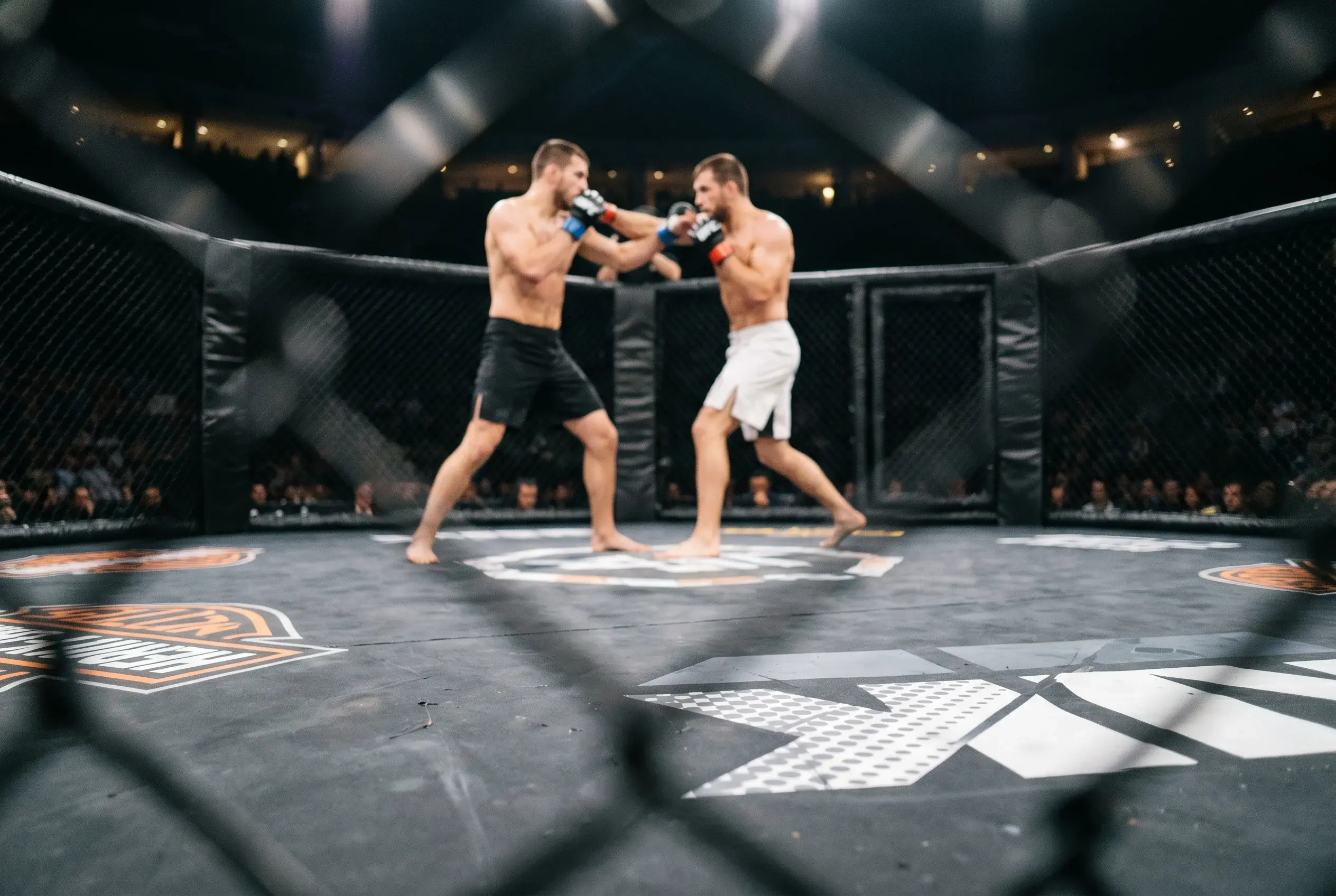
The corner-stool ads and Octagon canvas are the simplest piece. Pure awareness inventory. Most viewers process them as ambient brand context, which is exactly what they’re designed to do.
What changes for the California viewer
A Californian watching a UFC broadcast in 2026 sees almost exactly the same production package as a viewer in New Jersey. Same overlays, same partner logos, same between-rounds segments. The difference is in what those overlays can lead to. In New Jersey, a viewer can open the partner’s app and place the bet shown in the graphic; in California, they can’t legally do so on any state-regulated platform, because the state has no legal sports betting framework as of 2026.
What that means in practice is that broadcast-level sponsorship branding in California operates as awareness-only inventory from the consumer’s side. The partner gets the logo exposure, the data integration, the editorial association — but the viewer has no compliant path to convert. This is one of the reasons the sportsbook lobby continues to push for California market access; the awareness investment is already being made, and the conversion economics are missing.
For bettors, this asymmetry has a specific consequence. The overlays you see during a California-area broadcast were not designed for you. They were designed for the regulated-state viewer, and the assumption that you can act on them creates exactly the friction that drives some Californian residents toward offshore options — a path with material risks I’ve covered in more depth in the work on how PPV cycles concentrate betting volume around marquee cards. The overlays normalise the bet. The legal product to fulfil it doesn’t exist locally. That’s a structural mismatch the broadcast presentation does nothing to resolve.
The other piece I’d flag: in-California advertising for offshore sportsbooks is illegal, but the line between a UFC broadcast sponsor logo and an enticement to bet is blurry once you start counting overlays per hour. State regulators have not yet drawn a clear position on this in the absence of a legal market to compare against.
See also: how to bet on ufc in california — UFC revenue.
Trajectory through 2028 and what to watch
If sponsorship grew by sixty-three million dollars in a single year on a base of $251 million, the trajectory is the question. I’d expect the growth rate to compress — twenty-five percent year-over-year is not a sustainable rate when the base reaches $400 million, and the market for category-exclusive premium inventory is finite. But the mix within that line is the variable to watch.
Three things to monitor through 2028. First, whether UFC adds prediction-market operators as a separate sponsor tier or keeps them outside the gaming category. The current sportsbook partner structure assumes a state-licensed counterparty; a Kalshi-style federally-regulated event-contract platform doesn’t fit that frame cleanly, and UFC has incentives in both directions. Second, whether the betting-odds overlay packages get repriced as broadcaster standards evolve — some US regional sports networks have begun limiting the per-hour density of betting graphics, and if that becomes a broader standard the inventory loses value. Third, whether international betting partners expand into US broadcasts via simulcast carve-outs, which would change the partner composition without changing the dollar headline meaningfully.
For a bettor, the takeaway is simpler than the corporate trajectory. Treat the broadcast overlay as marketing, not as market consensus. The price you see on screen is the price the partner wanted you to see, not necessarily the sharpest available line.